Travvle
An AI-assisted travel planner that turns traveler preferences into personalized itinerary recommendations, while keeping travelers in control of their trip.
Overview
Travvle is an AI-assisted travel planning platform designed to make trip planning simpler and less fragmented.
Instead of manually searching for places to visit, arranging daily activities, and comparing travel options across different platforms, travelers can start by telling Travvle about their trip.
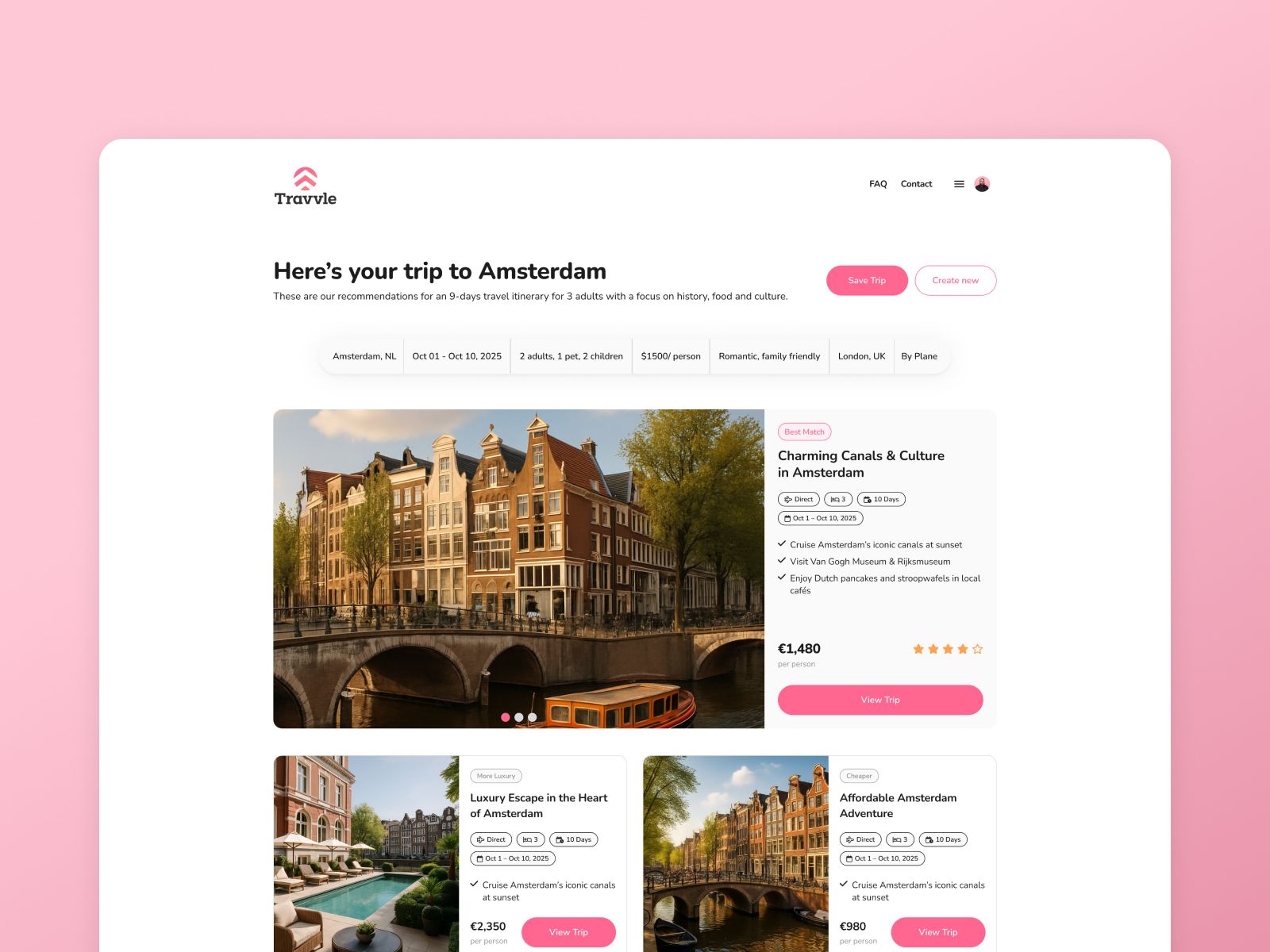
Based on their destination, travel dates, group size, budget, holiday style, and preferred transportation, Travvle generates personalized itinerary recommendations along with relevant hotel, flight, and attraction options.
The goal was not to let AI make every decision, but to help travelers move from an idea to a structured trip plan faster.
The Challenge
Planning a trip involves many small decisions.
Travelers need to decide where to go, how much they want to spend, what activities match their interests, where to stay, and how to get there.
These decisions are often spread across search engines, booking platforms, maps, notes, and travel websites.
The challenge was to simplify this process without taking control away from the traveler.
How might we use AI to reduce the effort of planning a trip while still giving travelers the flexibility to make it their own?
My Role
I worked on Travvle as the Product Designer, covering most of the design process from the initial concept through high-fidelity design.
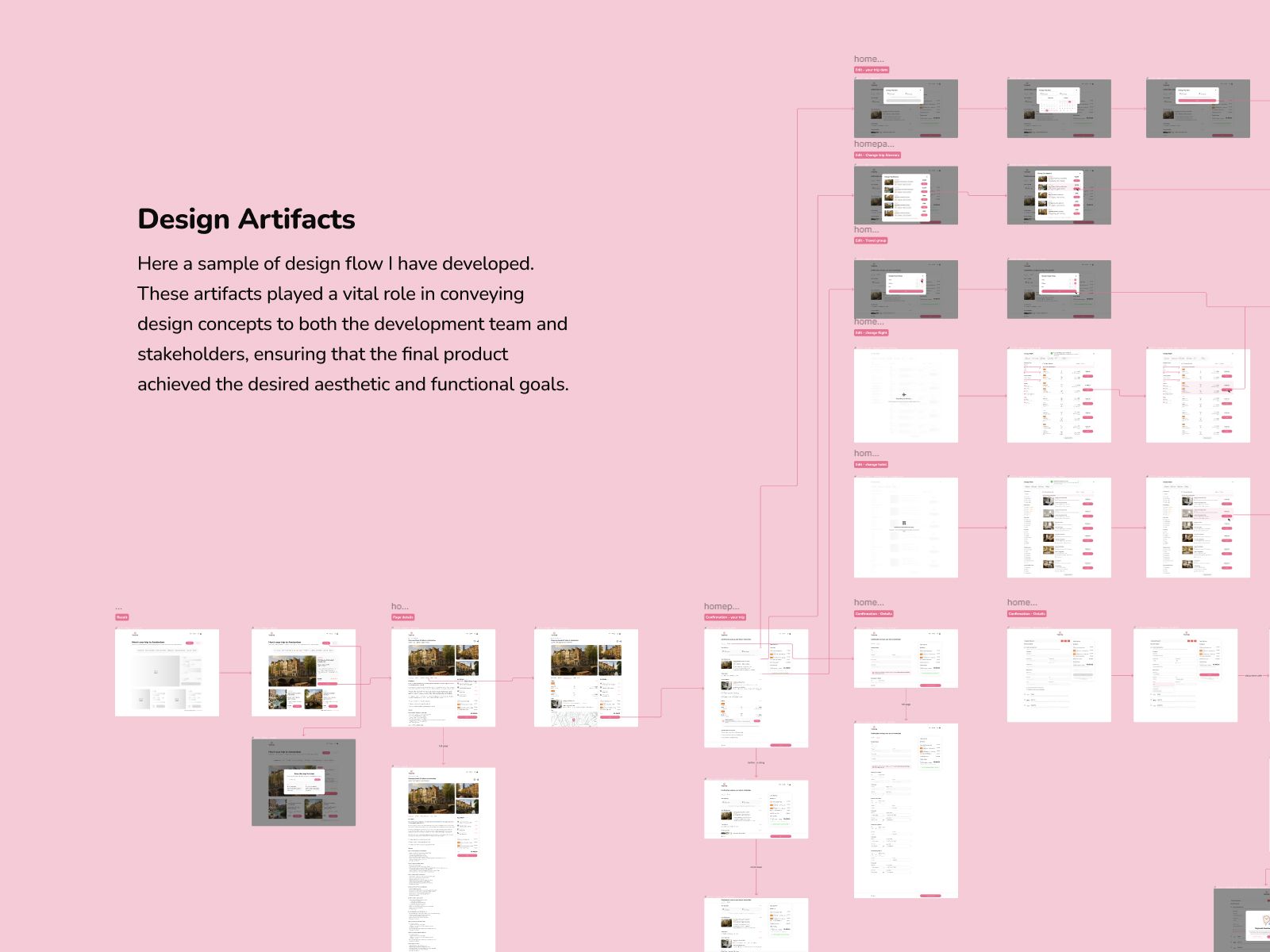
I translated the product idea into an end-to-end experience, defined the user flow and information architecture, designed the core trip planning experience, created the high-fidelity interface, and built the design system and reusable components.
I also created selected illustrations and visual assets used across the product.
Understanding the Traveler
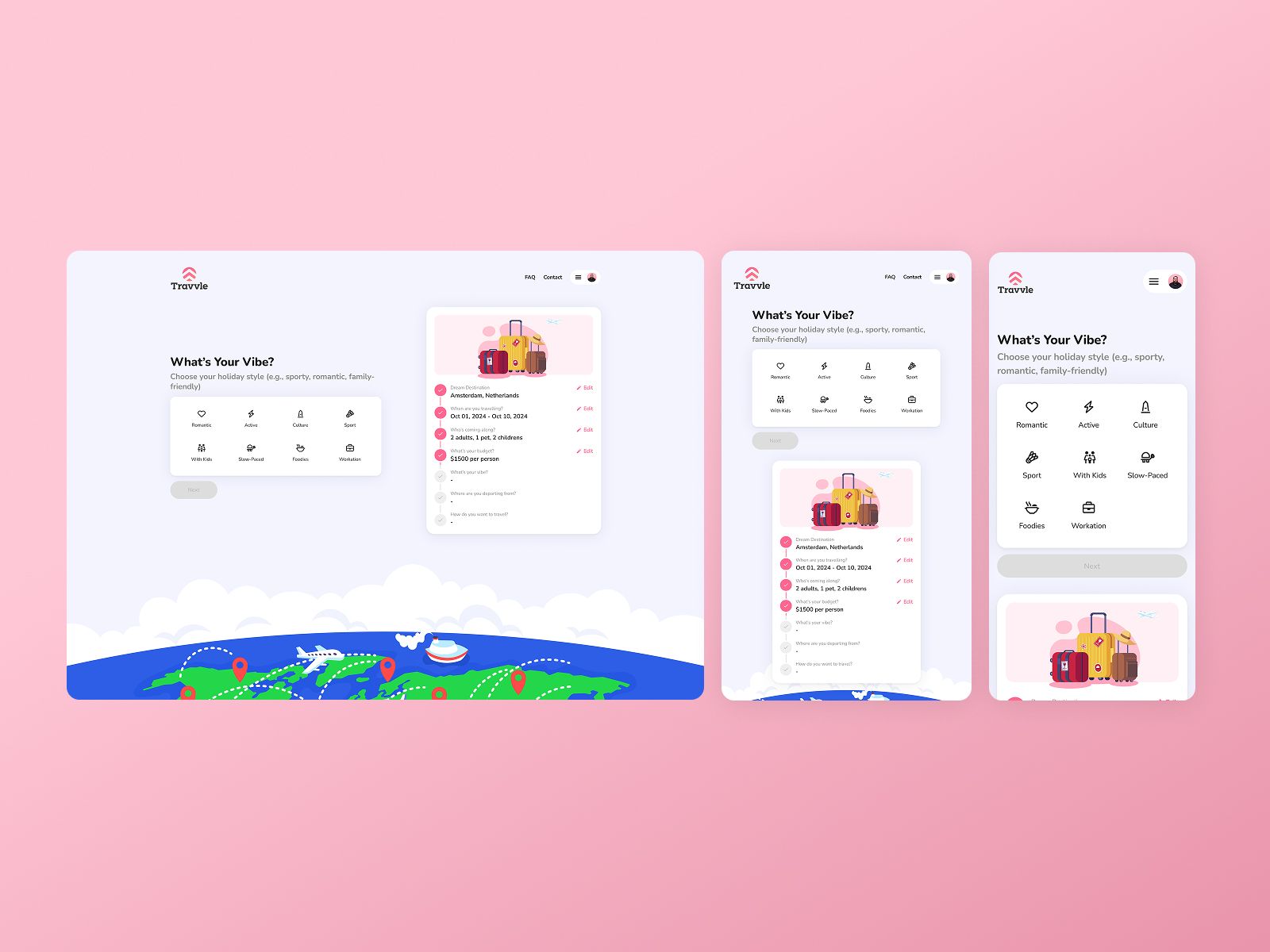
Before generating an itinerary, Travvle first gathers context about the trip.
Travelers provide key information such as their destination, travel dates, number of travelers, budget per person, preferred holiday style, and transportation.
Holiday styles can include preferences such as family-friendly, romantic, sporty, and other types of travel experiences.
These inputs give AI more context about what kind of trip the traveler is looking for instead of generating recommendations based only on a destination.
From Preferences to Recommendations
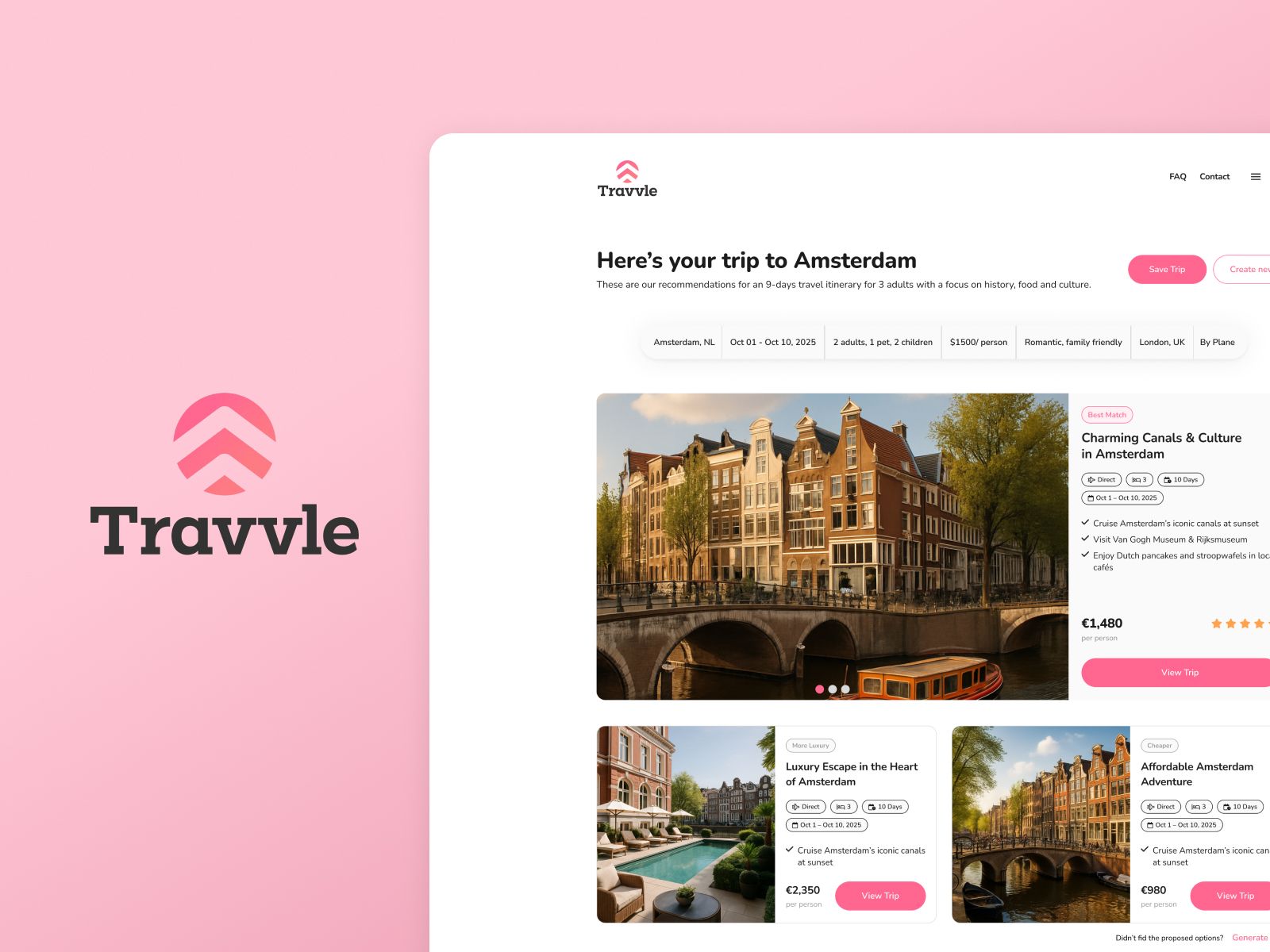
Once the trip preferences are defined, Travvle uses them to generate several itinerary recommendations.
Instead of presenting one itinerary as the “best” or only answer, travelers can explore different options and choose the one that feels most relevant to them.
If none of the recommendations fit, they can go back, adjust their preferences, and explore another set of suggestions.
Set preferences → Explore recommendations → Customize the trip
AI Recommends. Travelers Decide.
One of the main principles behind Travvle was keeping travelers in control.
AI-generated itineraries are treated as recommendations rather than final plans.
Travelers can change activities, adjust their schedule, include places outside the platform, or modify the itinerary based on their own preferences.
This flexibility is especially important because not every attraction or activity can be booked online.
Travvle helps create the starting point. The traveler decides what the actual trip becomes.
A Flexible Itinerary
Travel plans rarely stay exactly the same.
Rather than treating an AI-generated itinerary as a fixed output, I designed the itinerary as something travelers could continue shaping.
Activities can be changed based on personal preference, availability, or plans made outside Travvle.
This makes the itinerary feel more like a flexible travel planning workspace than a schedule created and controlled by AI.
AI should reduce the work of planning, not take ownership of the trip.
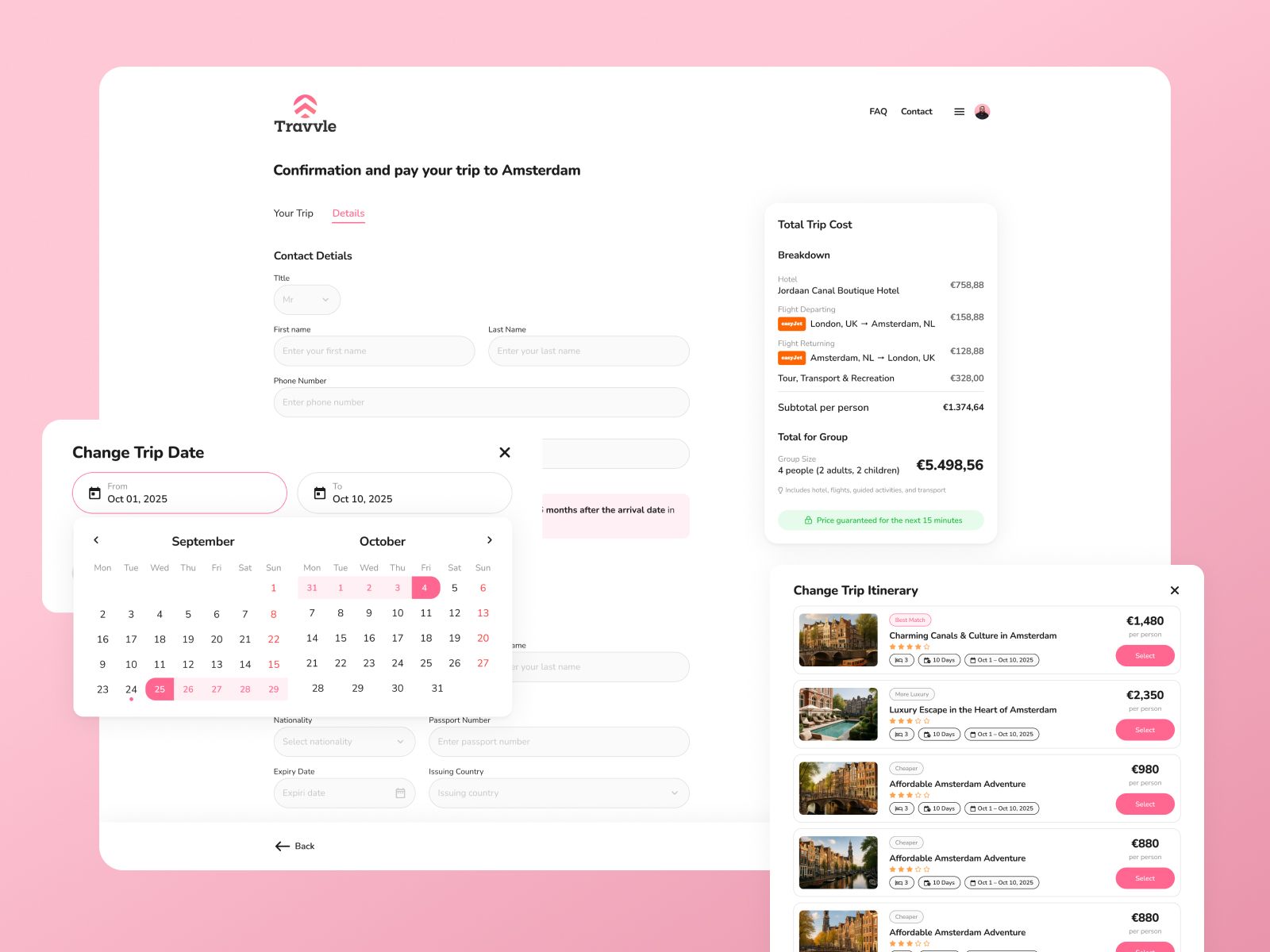
Connecting Planning and Booking
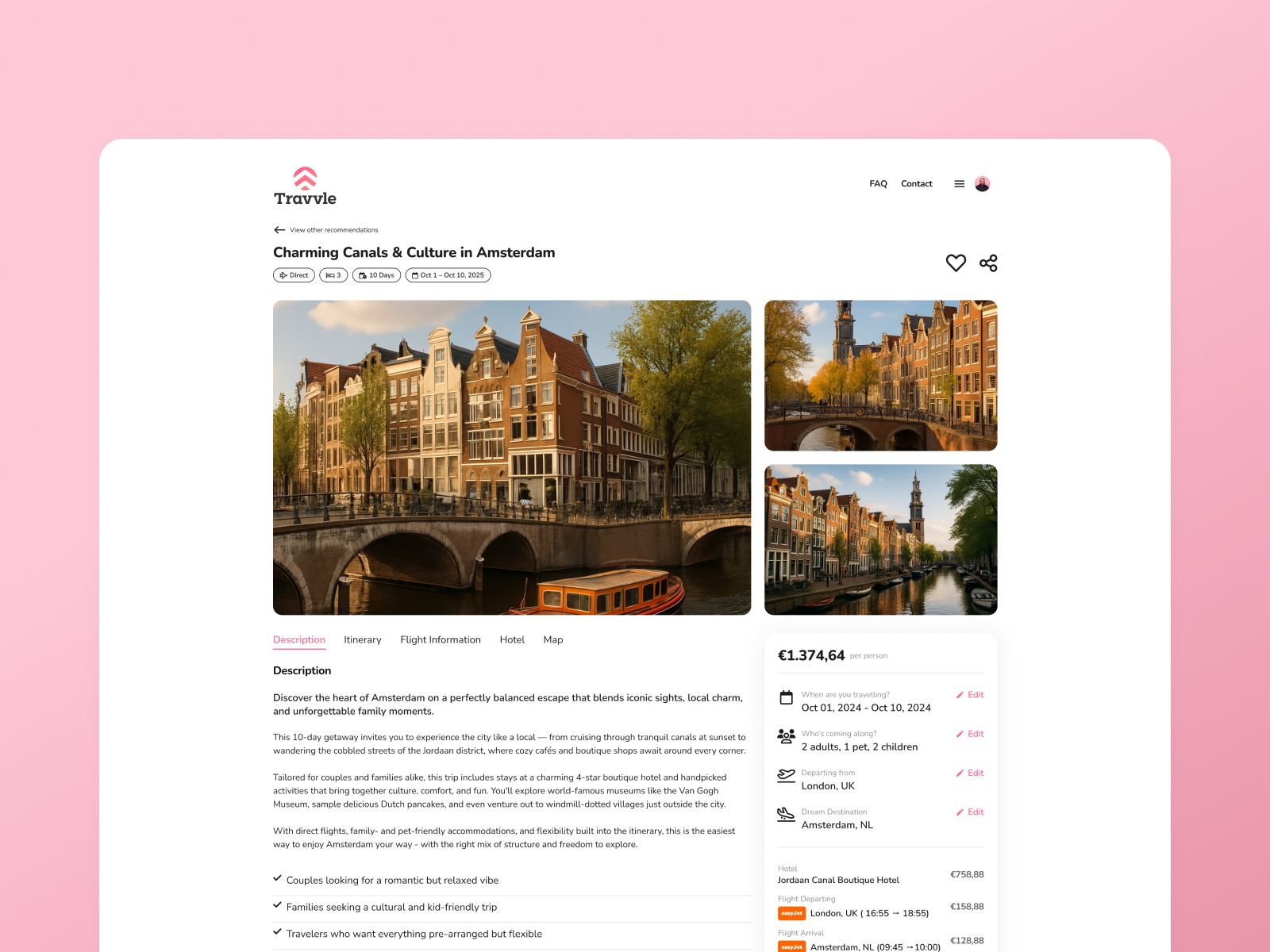
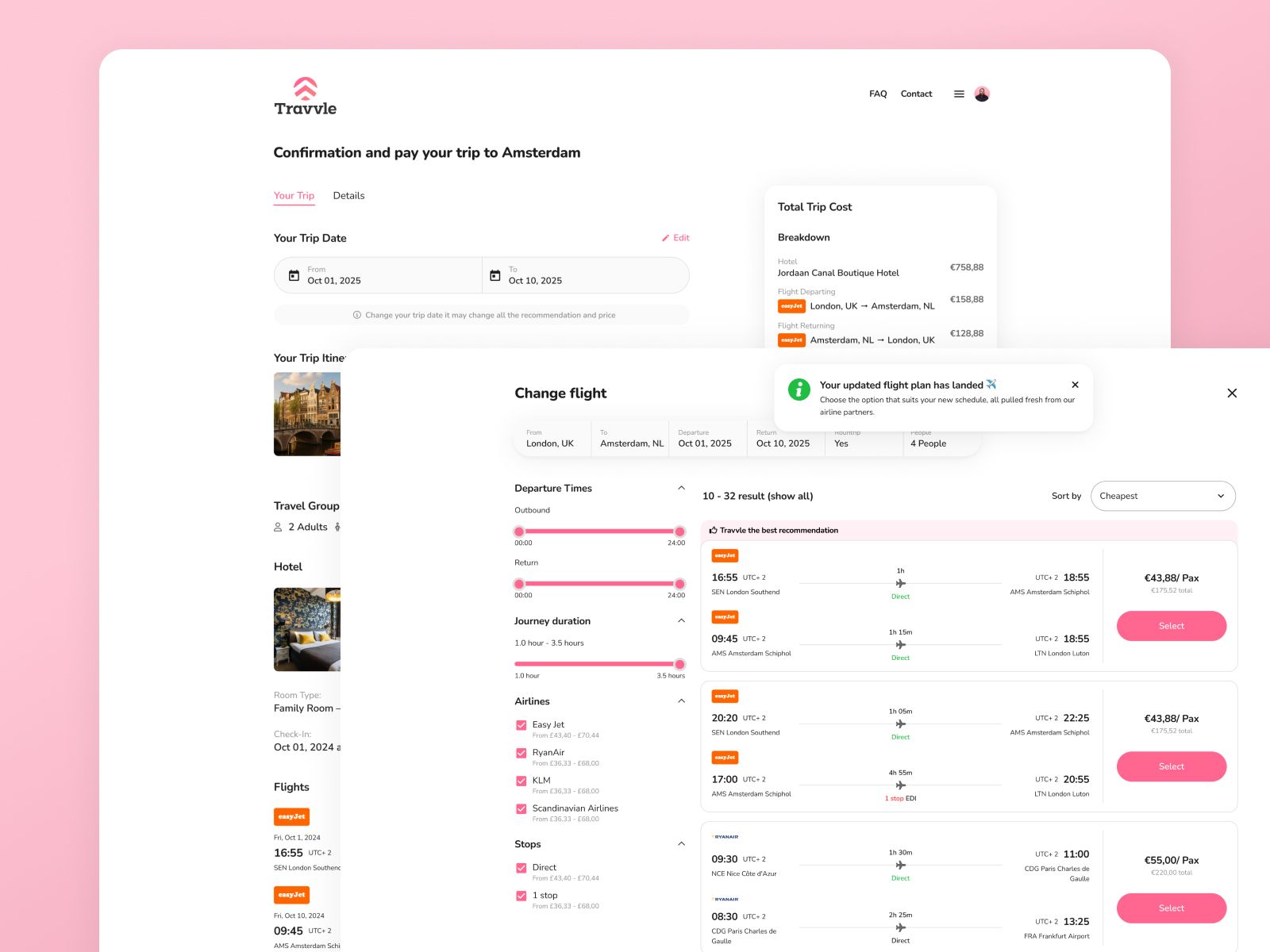
Travvle also helps travelers explore flight, hotel, and attraction options related to their trip.
However, recommendations and booking decisions remain separate.
AI can help surface relevant options, but travelers still compare and decide what they want to book.
This creates a clear distinction between two parts of the experience:
Planning
AI helps travelers discover possibilities and organize their trip.
Booking
Travelers remain responsible for the final choice.
Design System
Travvle includes multiple experiences across trip setup, itinerary planning, recommendations, and booking.
To keep the experience consistent, I created a reusable design system covering the product's visual foundations and core components.
The system helped maintain consistency across different screens and states while making the product easier to expand as new travel features were introduced.
Outcome
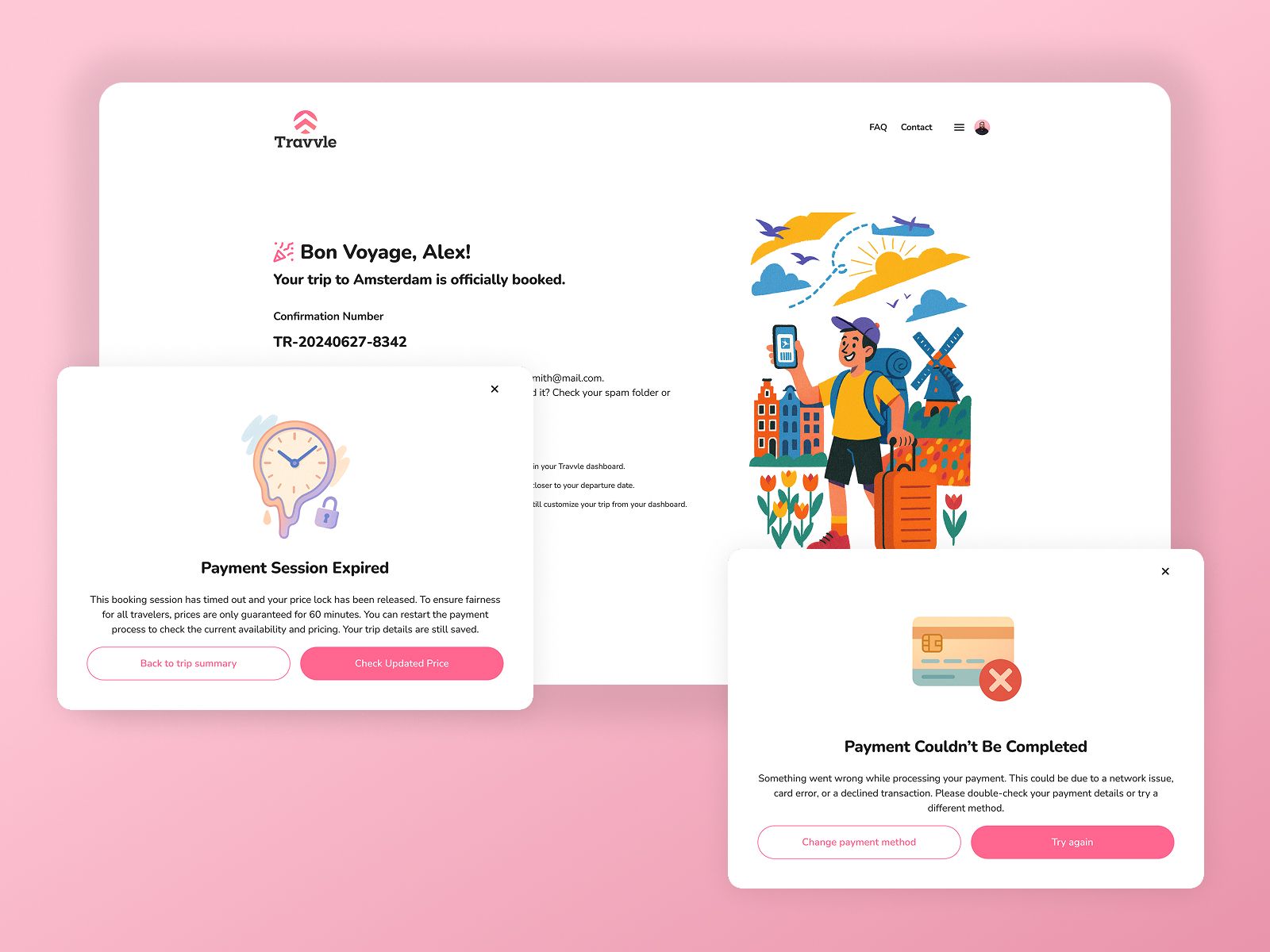
Travvle reached the high-fidelity product design stage, covering the core end-to-end journey, itinerary planning experience, travel recommendations, booking-related experiences, and design system.
The project is currently paused before development, so there are no production metrics or user behavior data available yet.
Even without reaching launch, the project gave me the opportunity to explore how AI could support a complex planning experience without replacing human decision-making.
Reflection
Looking back, one of the most important lessons from Travvle was understanding where AI should assist and where the user should remain in control.
AI works well for reducing the effort required to explore possibilities and create an initial plan. But traveling is personal, and recommendations should always remain flexible.
If I continued developing Travvle, I would focus on validating how travelers interact with generated recommendations, how frequently they modify their itinerary, which preferences have the strongest influence on their decisions, and how much assistance they expect from AI throughout the planning process.
Those insights would help define where Travvle should provide more assistance and where the experience should remain completely manual.
See Travvle in action
Explore the live experience or return to the full project archive.